
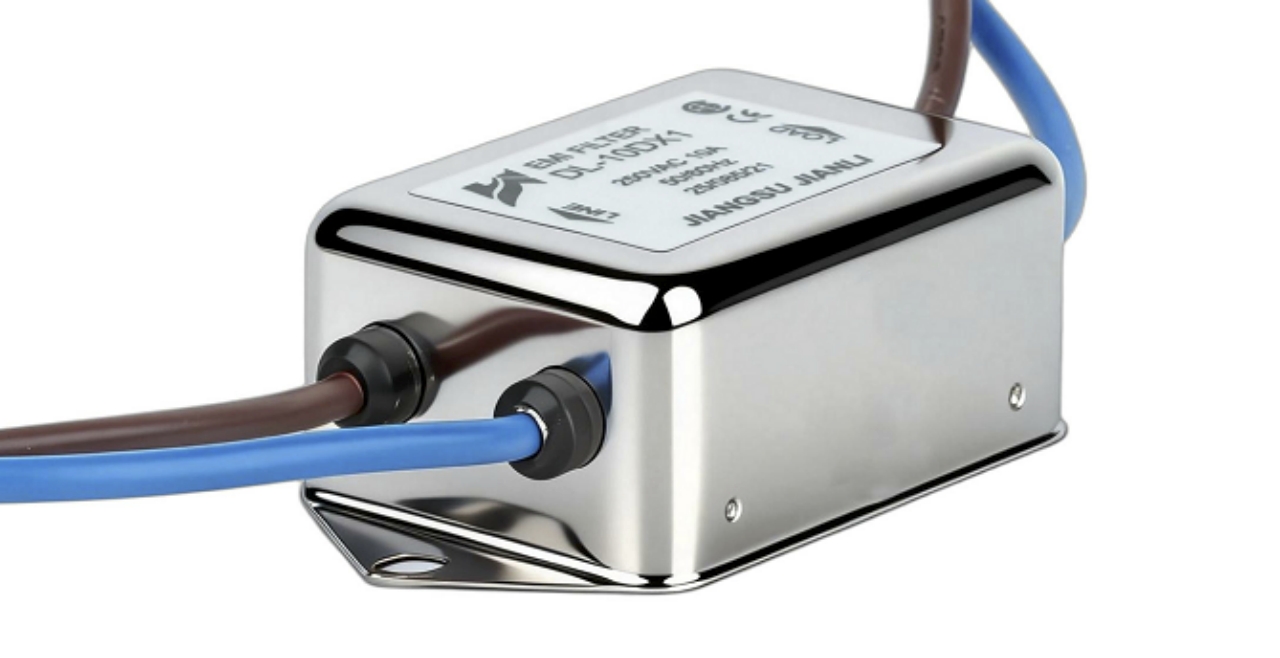
Abstract
Modern industrial equipment operates in increasingly dense electromagnetic environments. Variable-frequency drives, switching power supplies, servo motors, and digital control systems all generate conducted and radiated interference that degrades power quality and threatens equipment reliability. The single-phase filter — specifically engineered to suppress electromagnetic interference (EMI) on single-phase AC power lines — has become an essential component in industrial power system design.
This guide is written for B2B procurement engineers, electrical system designers, and equipment manufacturers who need to evaluate, specify, or source a single-phase power line filter. It covers the fundamental operating principles behind EMI attenuation, the technical parameters that define filter performance, the certification requirements that govern cross-border trade, and the industrial application scenarios where these components deliver measurable commercial value. By the end of this article, you will have the technical framework to select the correct single-phase filter for your application and justify that decision to both engineering and procurement stakeholders.
1. Understanding the Single-Phase Filter: Definition and Operating Principles
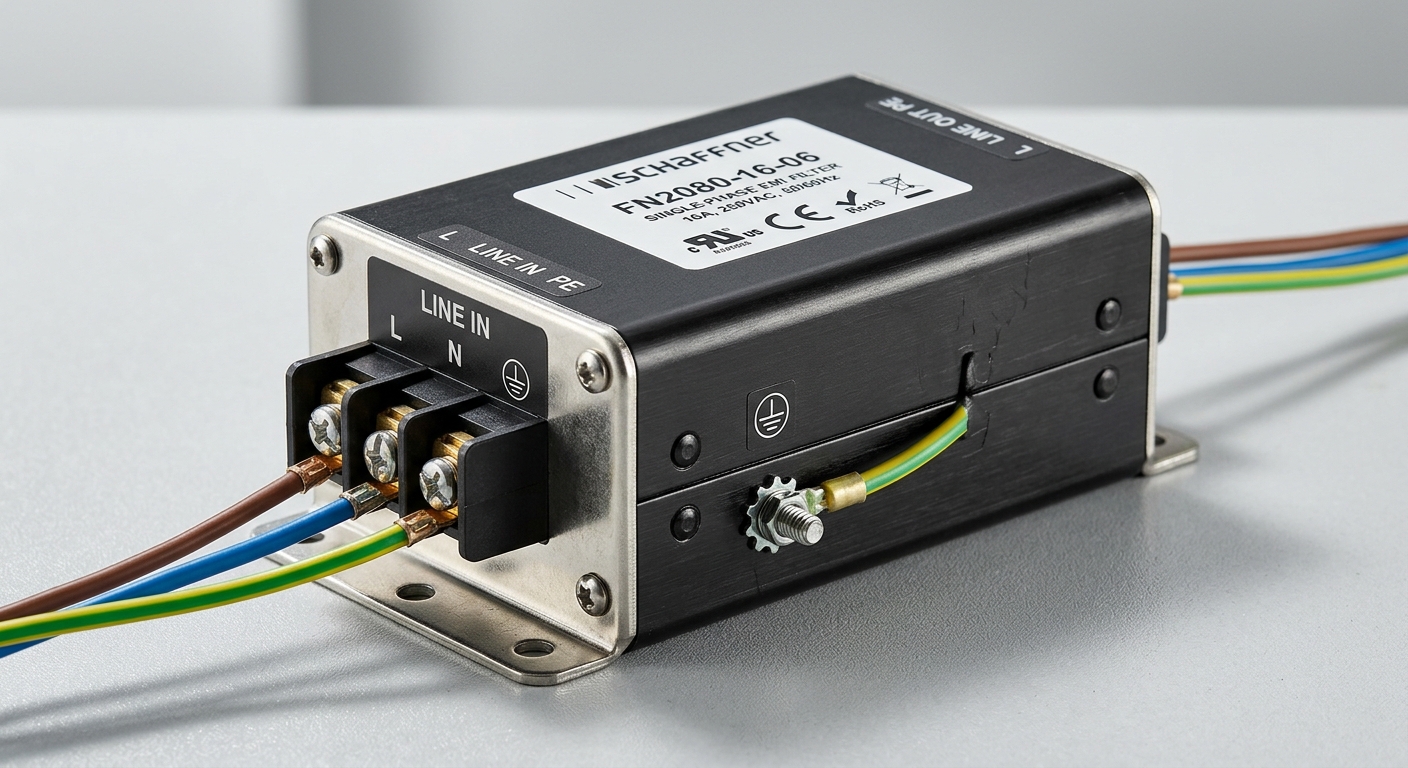
1.1 What Is a Single-Phase Filter?
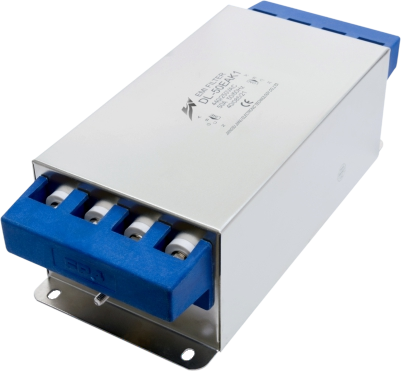
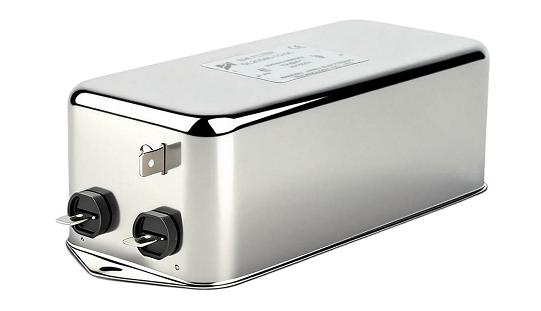
A single-phase filter is a passive electronic component installed on a single-phase AC power line — typically a 120 V or 230 V, 50/60 Hz supply — to attenuate high-frequency electromagnetic interference traveling in both directions between the power source and connected equipment. Its dual function is critical: it prevents conducted EMI generated internally by the equipment from propagating back into the utility grid, and it blocks external grid-borne noise from entering sensitive circuits.
Unlike three-phase EMI filters, which manage interference across three live conductors and a neutral, a single-phase filter operates on a two-conductor (line and neutral) or three-conductor (line, neutral, and ground) topology. This makes it the appropriate choice for single-phase loads including industrial control panels, medical devices, test and measurement instruments, and consumer-facing commercial equipment.
The component is distinct from a simple surge protector or line conditioner. A single-phase EMI filter is specifically optimized for frequency-selective attenuation — targeting the 150 kHz to 30 MHz conducted emission range defined by international EMC standards — rather than for voltage clamping or power conditioning.
1.2 How Does a Single-Phase Filter Work?
The operating principle of a single-phase filter is based on a passive LC (inductor-capacitor) network that presents high impedance to high-frequency noise while passing the 50/60 Hz power frequency with minimal loss.
Two distinct noise mechanisms must be addressed:
- Common-mode (CM) noise: Interference that appears simultaneously on both line and neutral conductors with respect to ground. This is typically generated by switching transistors and is the dominant emission type in switch-mode power supplies and inverters.
- Differential-mode (DM) noise: Interference that appears between the line and neutral conductors. It is often generated by rectifier circuits and tends to dominate at lower frequencies within the conducted emission band.
A well-designed single-phase filter addresses both. Common-mode chokes — wound on a shared toroidal core — attenuate CM noise without saturating under differential load current, because the differential flux components cancel within the core. Y-class capacitors (line-to-ground) provide a low-impedance return path for CM currents. X-class capacitors (line-to-neutral) and differential-mode inductors address DM noise. The combined network creates a frequency-dependent voltage divider that delivers the insertion loss specified in the product datasheet.
2. Key Technical Specifications and Performance Parameters
2.1 Critical Electrical Parameters
When evaluating a single-phase filter for procurement, the following parameters are non-negotiable in the specification process:
- Rated Voltage: Defines the maximum continuous operating voltage. Standard ratings include 115 V, 250 V, and 480 V AC. Selecting an undersized voltage rating is a safety and compliance failure.
- Rated Current: Must equal or exceed the maximum continuous load current. Derating for elevated ambient temperatures is required; most manufacturers provide derating curves for operation above 40°C.
- Insertion Loss (dB): The primary performance metric. Measured per CISPR 17 in a 50 Ω/50 Ω test circuit, insertion loss values of 40–80 dB across the 150 kHz–30 MHz range are typical for industrial-grade filters. Higher insertion loss indicates superior noise attenuation.
- Leakage Current (mA): The residual current flowing through Y capacitors to the protective earth conductor. This is a critical safety parameter — particularly in medical and food-processing environments where touch-current limits are strictly regulated.
- Impedance Matching: Real-world source and load impedances rarely match the 50 Ω test standard. Specifying filters with multi-stage LC topologies improves performance across a wider range of source/load impedance variations.
2.2 Construction Materials and Component Selection
The internal construction of a single-phase filter directly determines its long-term reliability and EMI performance:
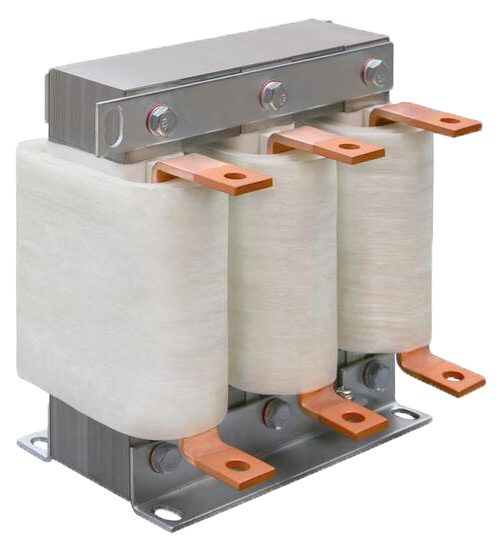
- Inductor Core Material: Toroidal cores (nanocrystalline, ferrite, or MPP alloy) offer superior permeability and compact geometry for common-mode chokes. EI laminated cores are used in some differential-mode inductors where saturation current handling is the priority.
- Capacitor Classification: X2-class capacitors (275 V AC, fail-safe open-circuit) are used for line-to-neutral connections. Y2-class capacitors (250 V AC, fail-safe open-circuit) connect line-to-ground. Both classes must meet IEC 60384-14 requirements for safety-critical applications.
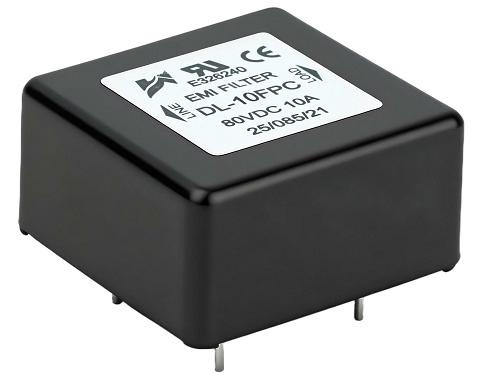
- Form Factor: Chassis-mount designs with screw-terminal or lug connections are standard for industrial panel integration. PCB-mount filters serve embedded power supply designs. DIN-rail mount variants simplify installation in control cabinet environments.
📊 Single-Phase Filter Performance Comparison Matrix
| Parameter | Entry-Level | Industrial Grade | High-Performance |
|---|---|---|---|
| Rated Current (A) | 1–6 | 10–30 | 50–100 |
| Insertion Loss (dB) | 30–45 | 50–65 | 70–80+ |
| Leakage Current (mA) | ≤3.5 | ≤1.0 | ≤0.5 |
| Operating Temp. (°C) | -10 to +50 | -25 to +85 | -40 to +100 |
| Certifications | CE | CE, UL, RoHS | CE, UL, ENEC, MIL-spec |
| Typical Application | Office equipment | CNC, automation | Medical, aerospace |
3. Compliance Standards and Certification Requirements
3.1 International EMC/Safety Certifications
For B2B buyers engaged in cross-border procurement, certification is not optional — it is a market access requirement. The key standards governing single-phase filters include:
- IEC 60939: The primary international product standard for passive EMC filters for power lines. Defines test methods, safety requirements, and performance classification. Compliance is foundational for CE marking.
- UL 1283: The North American safety standard for electromagnetic interference filters. Required for products sold into the U.S. and Canadian markets. Covers dielectric strength, leakage current, and thermal endurance.
- CE / ENEC Marking: CE marking demonstrates conformity with EU directives (Low Voltage Directive and EMC Directive). ENEC certification, issued by accredited European test bodies, provides a higher level of third-party assurance preferred by European OEMs.
- RoHS Compliance: Mandatory for products sold in the EU. Restricts hazardous substances including lead, mercury, cadmium, and specific brominated flame retardants in component materials.
When issuing an RFQ, always request test reports — not just declaration letters — and verify that certification scope covers your specific current and voltage rating.
3.2 Installation and Regulatory Considerations
Correct installation is as critical as correct component selection. Key requirements include:
- Grounding: The filter enclosure and internal Y-capacitor ground connections must connect to a low-impedance protective earth. A high-resistance ground connection negates common-mode attenuation performance.
- Physical Placement: Mount the filter as close as possible to the equipment’s power entry point. Every centimeter of unfiltered cable between the filter output and the equipment represents a potential re-contamination path.
- PCB Layout: For PCB-mount filters, separate input and output traces with a grounded copper pour between them. Avoid routing high-frequency switching traces parallel to filter input lines.
- Emission Limit Alignment: Verify that your filter’s insertion loss profile is sufficient to close the gap between your equipment’s unfiltered emission levels and the limits defined by EN 55011 (industrial equipment) or EN 55032 (multimedia equipment).
4. Industrial Application Scenarios and Commercial Value
4.1 Typical Use Cases Across Industries
Single-phase filters are deployed across a broad range of industrial and commercial sectors, with application-specific requirements driving filter selection:
- CNC Machinery and Industrial Automation: Servo drives and stepper motor controllers generate aggressive conducted emissions. High-current filters (30–100 A) with insertion loss exceeding 60 dB are standard. Chassis-mount designs with robust terminal blocks handle the mechanical vibration present in machine tool environments.
- Medical Equipment: IEC 60601-1-2 mandates strict EMC performance and limits leakage current to 0.5 mA or less in patient-care areas. Medical-grade single-phase filters with ENEC and UL 60601 compliance are required. This is a non-negotiable specification constraint.
- EV Charging Stations: Level 2 AC chargers (single-phase, 7.4 kW) require filters that handle continuous high-current operation in outdoor environments with wide temperature ranges. IP-rated enclosures and extended temperature ratings (-40°C to +85°C) are critical selection criteria.
- HVAC Systems: Variable-speed compressor drives generate harmonic and conducted EMI that affects building automation networks. Mid-range industrial filters (10–30 A) with broad-band attenuation profiles are typically specified.
- Test and Measurement Instruments: Low leakage current, high insertion loss, and minimal filter-induced signal distortion are the priority parameters for laboratory and calibration equipment applications.
4.2 ROI and Procurement Value for B2B Buyers
The commercial case for specifying a quality single-phase filter extends well beyond regulatory compliance:
- Equipment Lifespan Extension: Conducted EMI accelerates capacitor degradation and MOSFET gate oxide breakdown in sensitive electronics. Filtering at the power entry point directly reduces this stress, extending mean time between failures (MTBF).
- Downtime Cost Reduction: EMI-induced control system resets and data corruption in industrial environments carry significant production cost penalties. A $50–$200 filter investment routinely prevents thousands of dollars in unplanned downtime.
- Compliance Risk Mitigation: Products that fail CE or FCC conducted emission tests during market surveillance face recall costs, import bans, and reputational damage. Specifying a certified filter with documented insertion loss is the most cost-effective compliance assurance strategy.
- Total Cost of Ownership (TCO): When evaluating competing filter suppliers, factor in certification scope, current derating curves, and warranty terms alongside unit price. A marginally lower-priced filter that requires field replacement at 18 months delivers negative TCO versus a premium industrial-grade component rated for 10+ years of continuous operation.
FAQ: Common Questions from Procurement Engineers
1. What is the difference between a single-phase power line filter and a standard EMI filter — and how do I choose?
The terms are often used interchangeably, but “single-phase power line filter” specifically indicates the component is rated for mains voltage (120/230 V AC) and mains current levels on a single-phase supply. A “standard EMI filter” may refer to signal-line or data-line filters operating at low voltages. Choose based on the power line voltage, maximum load current, required insertion loss at your target frequency range, and the certification marks required for your target market.
2. What leakage current rating should I specify for medical or food-processing environments?
For medical equipment in patient-care areas, IEC 60601-1-2 limits earth leakage current to 0.5 mA maximum. For food-processing environments where personnel may contact equipment in wet conditions, specify filters with leakage current ≤1.0 mA and confirm compliance with applicable local safety standards (e.g., UL, CSA). Always request third-party test data, not self-declared values.
3. How do I verify CE and UL compliance before placing a bulk order?
Request the full test report (not just the declaration of conformity) from the manufacturer. For CE, verify the report references IEC 60939 and was issued by a recognized EU notified body. For UL, confirm the component appears in UL’s online Product iQ database under the manufacturer’s name and exact model number. Conduct this verification before issuing a purchase order — not after receiving the first shipment.
Conclusion
The single-phase filter is a precision power quality component that delivers measurable value across equipment protection, regulatory compliance, and operational continuity. Selecting the correct filter requires a systematic evaluation of rated current, insertion loss profile, leakage current limits, operating temperature range, and certification scope — all matched to the specific demands of your application and target market.
For procurement engineers, the key takeaway is this: filter selection is a technical decision with direct commercial consequences. Underspecifying insertion loss risks compliance failure. Ignoring leakage current limits creates safety liability. Sourcing uncertified components blocks market access. Investing in properly specified, third-party certified single-phase filters is the most cost-effective strategy for protecting both your equipment and your business.
Contact our technical sales team to discuss your application requirements and receive a customized filter recommendation with full certification documentation.