
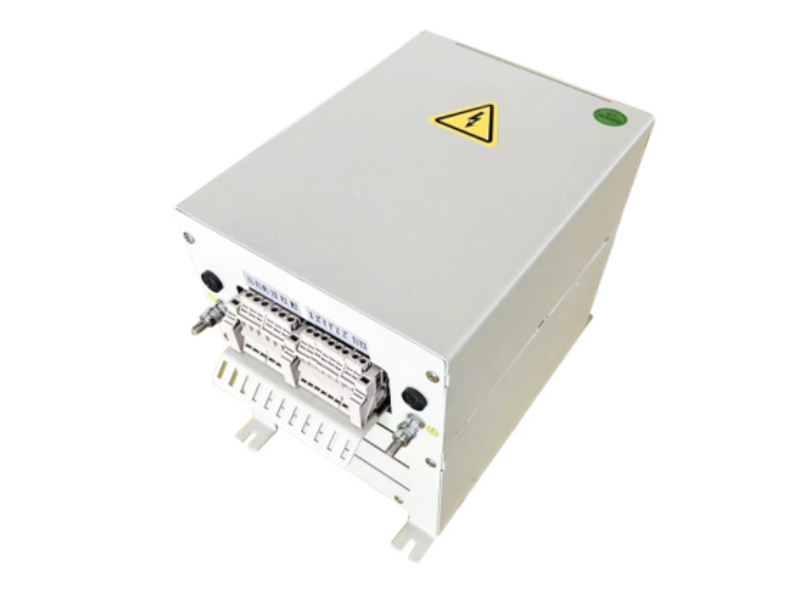
Executive Summary
A single-phase EMI filter operates on 1-phase AC power (typically 120V or 230V), while a three-phase filter handles 3-phase systems (208V–480V). Selection depends on input voltage, current rating, and the conducted EMI suppression requirements of the target equipment.
1. Core Differences: Single-Phase vs. Three-Phase Filters
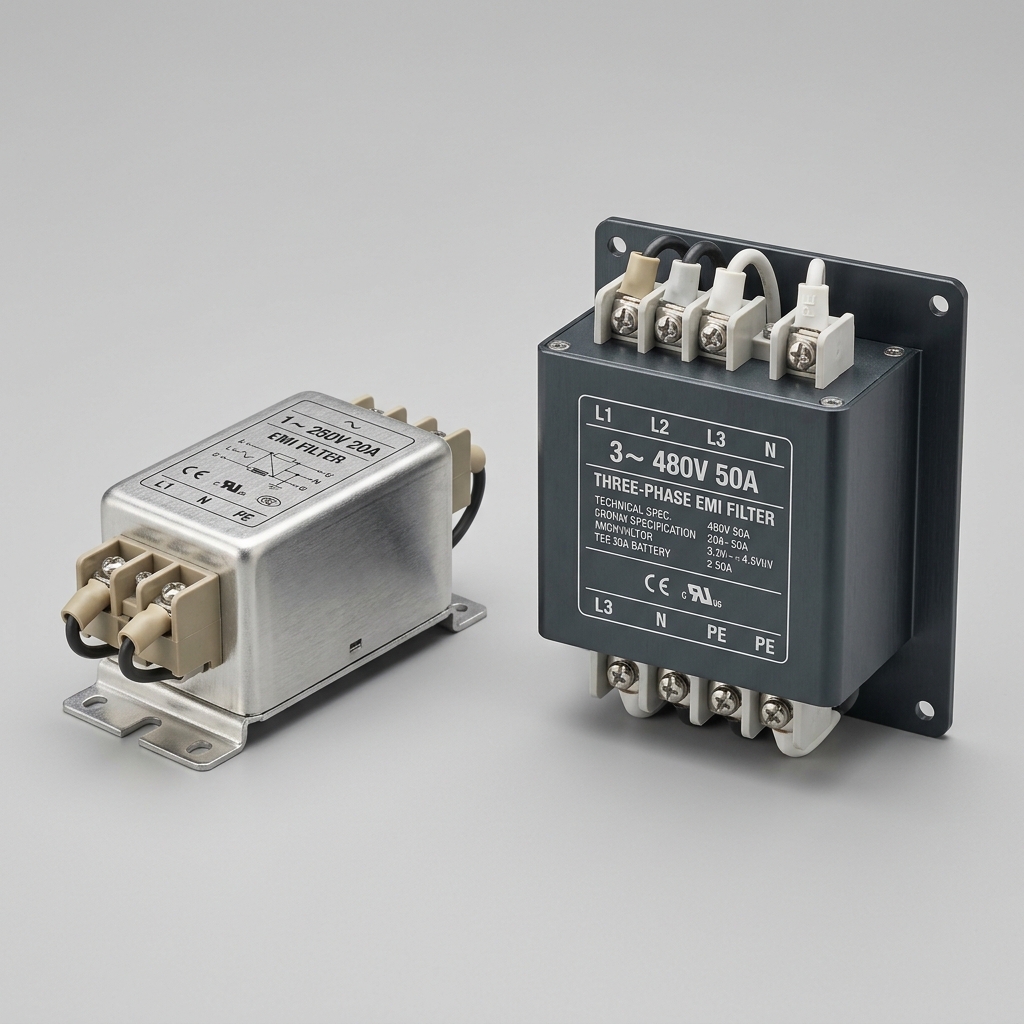
Electrical Architecture
- Single-phase filter: 2-wire or 3-wire (Line + Neutral + Ground); designed for single-phase conducted EMI suppression.
- Three-phase filter: 3-wire or 4-wire (L1/L2/L3 + Neutral/Ground); requires balanced impedance across all phases.
- Phase count directly determines internal component topology—inductors, X-capacitors, and Y-capacitors are configured differently.
Attenuation Performance
| Parameter | Single-Phase Filter | Three-Phase Filter |
|---|---|---|
| Typical Voltage Range | 120V / 230V AC | 208V / 400V / 480V AC |
| Current Range | 1A – 100A | 6A – 600A+ |
| Common Mode Attenuation | 40–80 dB | 40–80 dB |
| Differential Mode Attenuation | 20–60 dB | 20–60 dB |
| Leakage Current | 0.5–5 mA | 3–30 mA |
| Applicable Standard | IEC 60939, CISPR 17 | IEC 60939, CISPR 17 |
Physical Form Factor
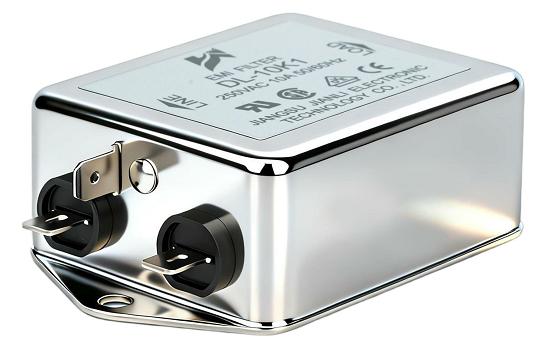
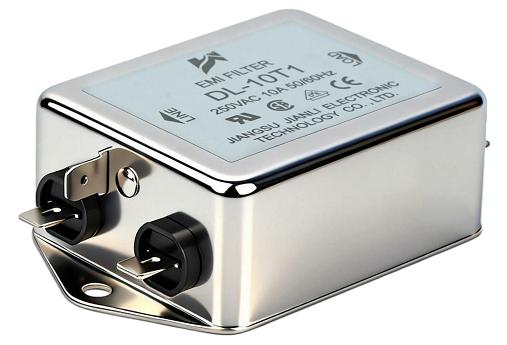
- Single-phase EMI power filters are compact; typical chassis-mount units measure 50–200mm in length.
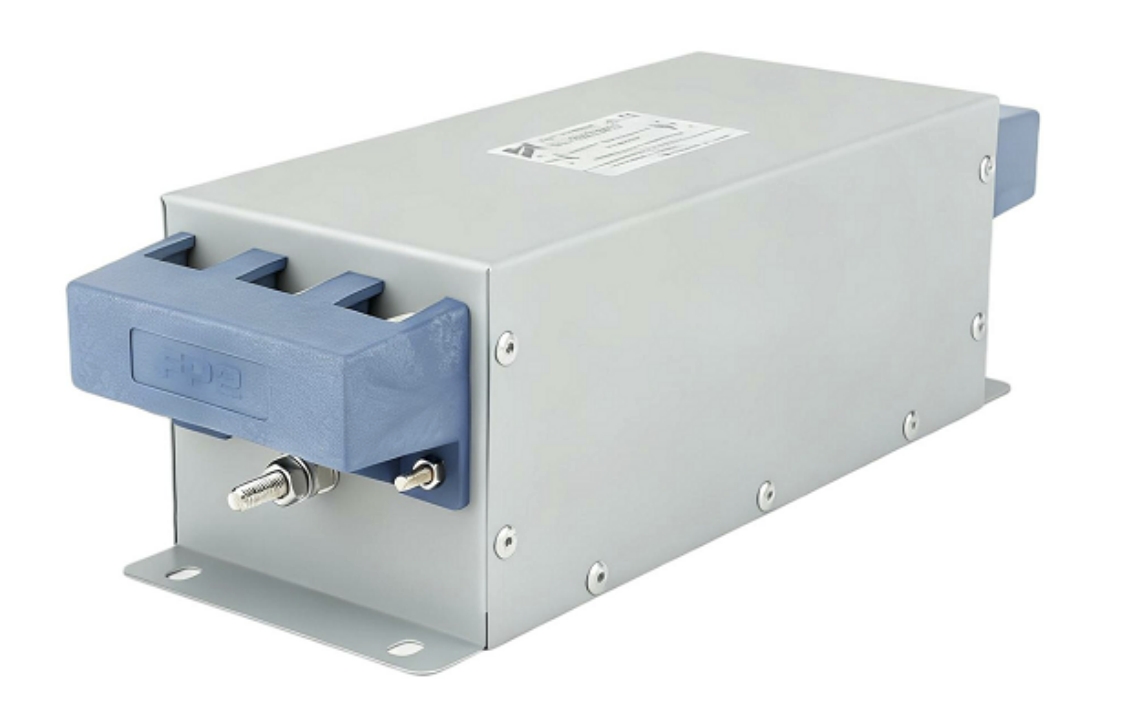
- Three-phase power line EMI filters are larger due to triple inductor cores; DIN-rail and panel-mount configurations are standard.
- Weight difference is significant: single-phase units average 0.2–1.5 kg; three-phase units range from 1 kg to over 10 kg.
2. Which Equipment Requires a Single-Phase EMI Filter?
Residential and Light Commercial Applications
Industrial single-phase filters are used wherever the power input is a standard single-phase AC line:
- Office equipment: PCs, servers, printers (230V/15A typical)
- Medical devices: Patient monitors, imaging peripherals (IEC 60601-1-2 compliance required)
- Telecom power supplies: Rectifiers and DC-DC converters in 19-inch rack systems
- Laboratory instruments: Oscilloscopes, signal analyzers, bench-top power supplies
- Consumer electronics manufacturing lines: Test stations operating on single-phase branch circuits
Industrial Machinery on Single-Phase Circuits
- CNC control panels fed by single-phase branch circuits from a 3-phase distribution board
- Small servo drives rated below 3 kW on single-phase input
- Industrial sensors and PLCs in single-phase control cabinets
Rule of thumb: If the equipment nameplate shows “1~” or “1PH” with a voltage of 100–240V AC, a single-phase EMI noise suppression filter is the correct choice.
3. Which Equipment Requires a Three-Phase Filter?
High-Power Industrial Systems
Three-phase power line EMI filters are mandatory for:
- Variable frequency drives (VFDs): Switching frequencies of 2–16 kHz generate severe conducted EMI on all three phases simultaneously.
- Industrial motors: 3-phase induction motors above 1.5 kW with integrated drive electronics.
- CNC machining centers: Spindle drives and servo amplifiers operating at 400V/3-phase.
- Welding equipment: Inverter-based welders drawing 50–400A from 3-phase supplies.
- Data center UPS systems: Three-phase UPS units from 10 kVA to several MVA.
Key Differentiator
A three-phase filter must suppress common-mode and differential-mode noise across all three phase conductors simultaneously. Using three separate industrial single-phase filters in a 3-phase system is not equivalent—inter-phase coupling and neutral current imbalance will degrade attenuation by 10–20 dB.
4. Critical Specifications for EMI Filter Selection
Electrical Parameters
| Specification | Typical Range | Selection Criteria |
|---|---|---|
| Rated Voltage | 120V / 250V / 480V | Must exceed max line voltage by ≥10% |
| Rated Current | 1A – 600A | Size to 125% of max load current |
| Operating Frequency | 50Hz / 60Hz | Match regional grid frequency |
| Leakage Current Class | <0.5 mA / <3.5 mA / <5 mA | Medical: <0.5 mA; Industrial: <5 mA |
| Insertion Loss (CM) | 40–80 dB @ 150 kHz–30 MHz | Per CISPR 17 test method |
| Operating Temperature | -25°C to +85°C | Derate current above 40°C |
Compliance Standards
- CISPR 32 / EN 55032: Limits for multimedia equipment emissions.
- IEC 61000-4-4: Electrical fast transient (EFT) immunity.
- IEC 60939-2: Safety requirements for passive EMC components.
- UL 1283: North American safety standard for EMI filters.
- MIL-STD-461G: Defense and aerospace conducted emissions.
Mechanical and Environmental
- IP rating: IP20 for enclosed panels; IP65/IP67 for harsh industrial environments.
- Mounting: Chassis-mount, DIN-rail, or PCB-mount depending on integration level.
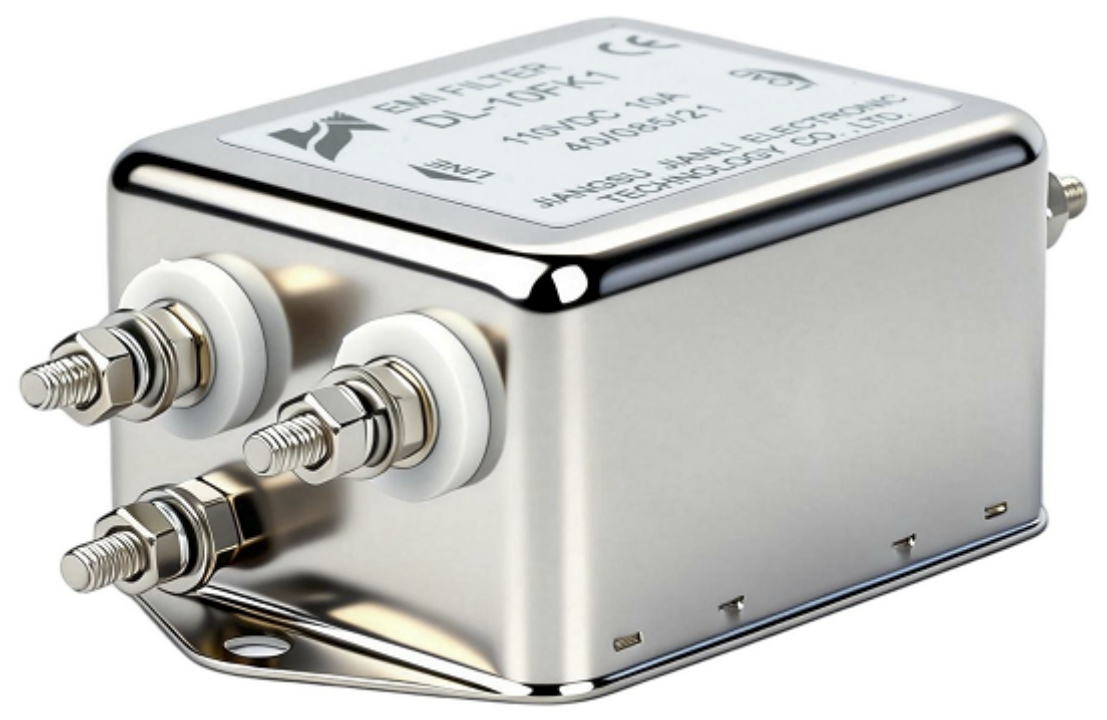
- Terminal type: Screw terminal, quick-connect, or flying leads for single-phase EMI power filter variants.
5. How Manufacturers Select the Right EMI Filter
Step-by-Step Selection Process
Step 1 – Identify power supply type
Confirm single-phase (1~) or three-phase (3~) from the equipment nameplate.
Step 2 – Determine rated current
Measure or calculate maximum operating current; multiply by 1.25 for the filter’s rated current.
Step 3 – Define EMI limits
Identify the applicable standard (CISPR 32, FCC Part 15 Class B, MIL-STD-461G) to determine required insertion loss in dB.
Step 4 – Check leakage current constraints
Medical applications mandate <0.5 mA; general industrial equipment allows up to 5 mA per IEC 60950-1.
Step 5 – Evaluate environmental conditions
Ambient temperature, humidity, and vibration levels determine IP rating and derating requirements.
Step 6 – Validate with pre-compliance testing
Conduct bench-level conducted emissions scans (150 kHz–30 MHz) using a LISN and spectrum analyzer before final filter selection.
Common Selection Errors
- Undersizing current rating: Causes overheating and capacitor degradation within 6–12 months.
- Ignoring source impedance: Filter performance varies with supply impedance; always test in-system.
- Mismatching phase count: Installing a single-phase conducted EMI filter on a 3-phase line creates unbalanced suppression and potential safety hazards.
6. Real-World Application Scenarios
Scenario A: Medical Imaging Peripheral (Single-Phase)
- Equipment: Ultrasound workstation, 230V/10A, IEC 60601-1-2 Class B compliance required.
- Filter selected: Industrial single-phase filter, 250V/10A, leakage current <0.5 mA, common-mode attenuation ≥60 dB @ 1 MHz.
- Result: Conducted emissions reduced from 65 dBµV to 42 dBµV, passing EN 55032 Class B limits.
Scenario B: 22 kW VFD in Automotive Plant (Three-Phase)
- Equipment: Variable frequency drive, 400V/3-phase/40A, CISPR 11 Class A required.
- Filter selected: Three-phase power line EMI filter, 480V/50A, insertion loss ≥50 dB @ 150 kHz.
- Result: Conducted emissions on all three phases reduced below EN 55011 Class A limits; neighboring PLC interference eliminated.
Scenario C: CNC Control Cabinet (Single-Phase Branch)
- Equipment: CNC controller panel, 120V/20A single-phase branch from 3-phase distribution.
- Filter selected: Single-phase EMI noise suppression filter, 250V/20A, DIN-rail mount, IP20.
- Result: Differential-mode noise at 10 MHz attenuated by 45 dB; machine communication errors reduced to zero.
7. Comparison Summary Table
| Criteria | Single-Phase EMI Filter | Three-Phase EMI Filter |
|---|---|---|
| Power System | 1-phase AC | 3-phase AC |
| Typical Applications | Office, medical, light industrial | VFDs, motors, heavy industrial |
| Current Range | 1A – 100A | 6A – 600A+ |
| Physical Size | Compact | Large |
| Cost Range | $5 – $200 USD | $50 – $2,000+ USD |
| Leakage Current | Lower (0.5–5 mA) | Higher (3–30 mA) |
| Installation Complexity | Low | Medium–High |
FAQ: Single-Phase vs. Three-Phase EMI Filters
Q1: What is the main difference between single-phase and three-phase filters?
Phase count, conductor configuration, and internal component topology differ fundamentally.
Q2: Which equipment requires a single-phase EMI filter?
Any device with a “1~” nameplate rating: PCs, medical devices, small servo drives.
Q3: Can a single-phase EMI filter reduce conducted electromagnetic interference?
Yes—common-mode attenuation of 40–80 dB is achievable across 150 kHz–30 MHz.
Q4: What specifications matter most when selecting an industrial EMI filter?
Rated current, insertion loss (dB), leakage current class, and compliance standard.
Q5: How can manufacturers choose the right EMI filter for industrial equipment?
Match phase count, size current to 125% of load, verify insertion loss against applicable EMC standard.
Q6: Can three separate single-phase filters replace one three-phase filter?
No—inter-phase coupling loss degrades attenuation by 10–20 dB; always use a dedicated three-phase unit.
Q7: What is the leakage current limit for medical-grade single-phase EMI filters?
Less than 0.5 mA per IEC 60601-1-2 and EN 60950-1.
Q8: What standard governs insertion loss testing for EMI filters?
CISPR 17 defines the 50Ω/50Ω and 0.1Ω/100Ω test methods for filter insertion loss measurement.
Conclusion
Core finding: The selection between a single-phase EMI power filter and a three-phase EMI power filter is determined by the equipment’s power input configuration—not by EMI severity alone.
Actionable recommendations:
- Confirm phase count from the equipment nameplate before specifying any filter.
- Size rated current to at least 125% of maximum operating current.
- Validate insertion loss requirements against the applicable CISPR or IEC standard.
- For medical applications, enforce the <0.5 mA leakage current threshold.
- Always perform in-system conducted emissions testing after installation to confirm real-world attenuation.
Selecting the correct EMI filter—whether an industrial single-phase filter or a three-phase power line EMI filter—is a foundational step in achieving regulatory compliance and ensuring long-term equipment reliability in demanding electrical environments.
References & Standards
- IEC 60939-2: Passive filter units for electromagnetic interference suppression
- CISPR 17: Methods of measurement of the suppression characteristics of passive EMC filtering devices
- CISPR 32: Electromagnetic compatibility of multimedia equipment — Emission requirements
- IEC 61000-4-4: Testing and measurement techniques — Electrical fast transient/burst immunity test
- IEC 60601-1-2: Medical electrical equipment — Electromagnetic disturbances
- UL 1283: Standard for Electromagnetic Interference Filters
- MIL-STD-461G: Requirements for the control of electromagnetic interference characteristics
- FCC 47 CFR Part 15 Subpart B: Unintentional radiators — Conducted emission limits