
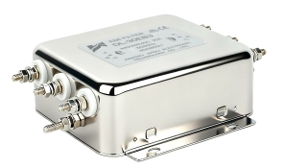
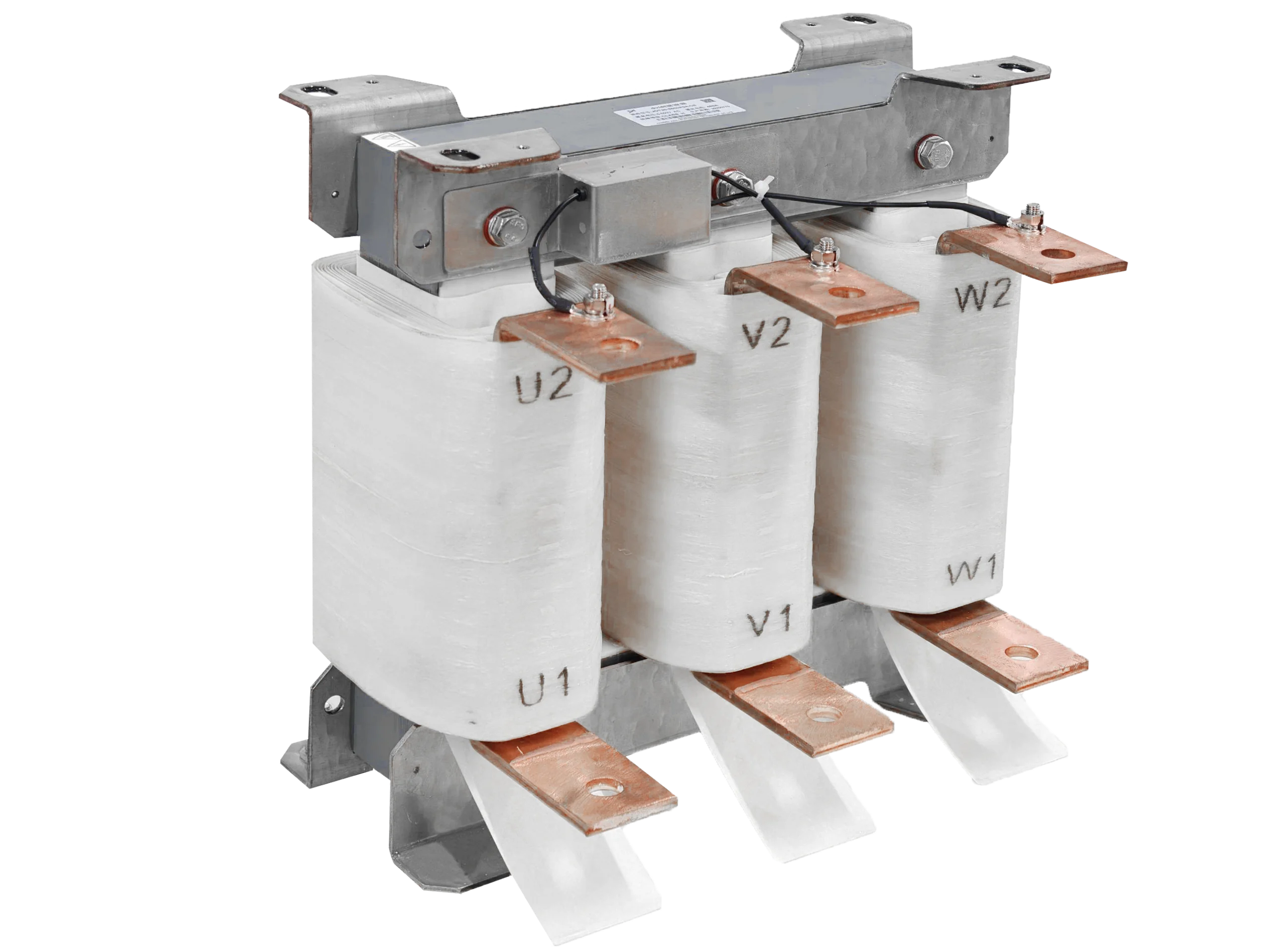
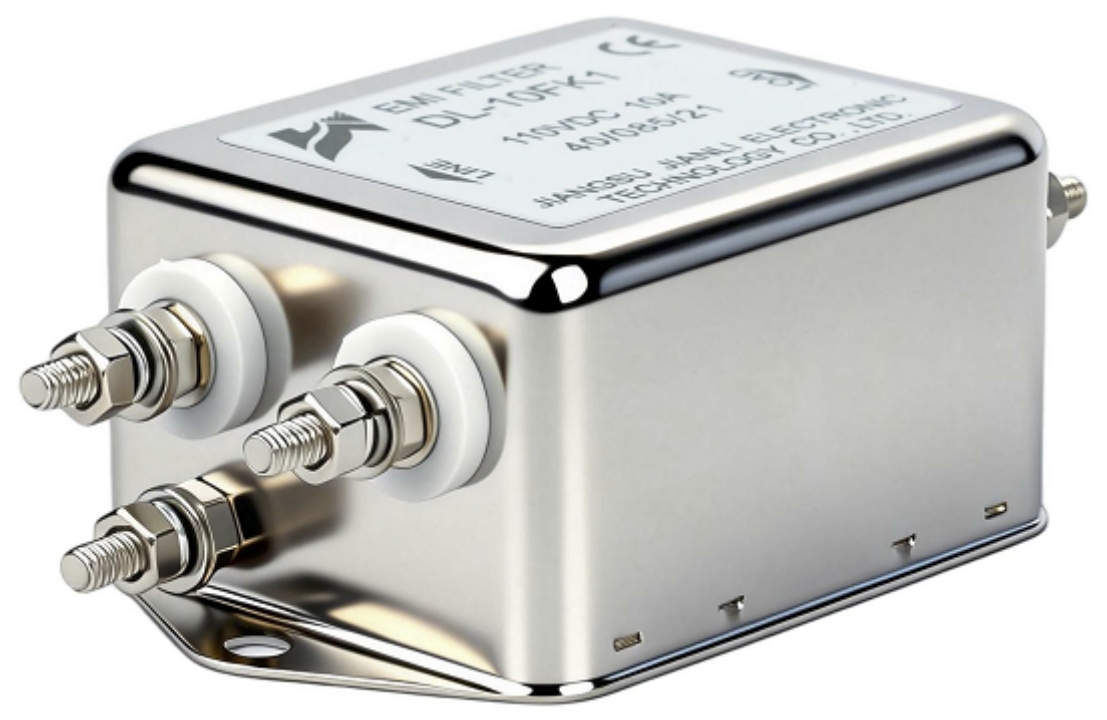
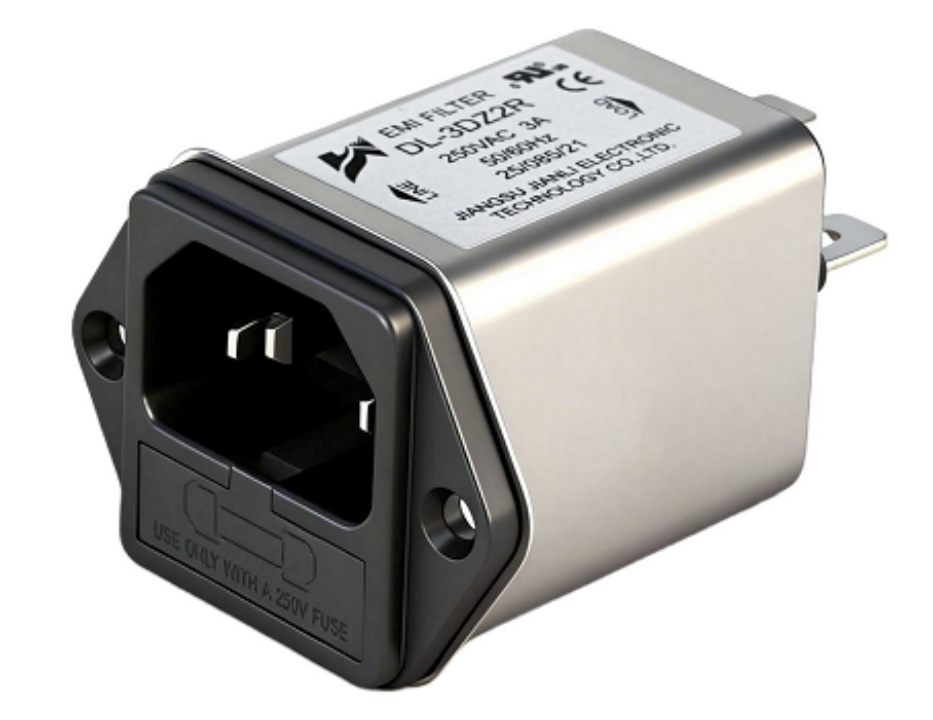
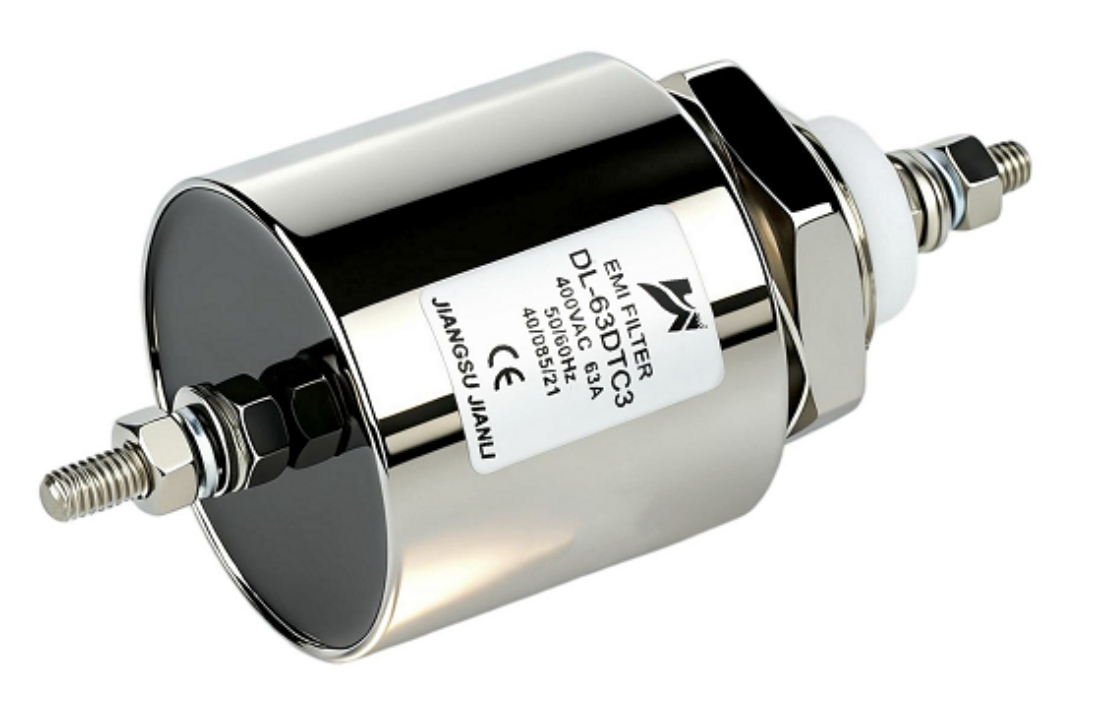
A Three Phase Filter suppresses conducted electromagnetic interference (EMI) on three-phase power lines, protecting industrial equipment from noise-induced failures. Correct selection requires matching current rating, attenuation class, and leakage current to the specific load.
What Is a Three Phase Filter and How Does It Work?
A Three Phase Filter is a passive LC network inserted between a three-phase power source and a load to attenuate high-frequency conducted noise in both common mode (CM) and differential mode (DM).
Core operating principle:
- Common-mode choke: Wound on a high-permeability toroidal core; presents high impedance to noise currents flowing in the same direction on all three phases and neutral.
- Differential-mode inductors: Attenuate noise currents flowing between phase conductors.
- X/Y capacitors: Shunt high-frequency energy to ground (Y caps) or across line conductors (X caps).
Typical insertion loss range:
| Frequency Band | Common-Mode Attenuation | Differential-Mode Attenuation |
|---|---|---|
| 150 kHz – 1 MHz | 40 – 60 dB | 30 – 50 dB |
| 1 MHz – 30 MHz | 60 – 80 dB | 50 – 70 dB |
| 30 MHz – 100 MHz | 50 – 70 dB | 40 – 60 dB |
The filter must comply with IEC 60939 (passive EMC components) and meet CISPR 11 / CISPR 32 emission limits for industrial environments.
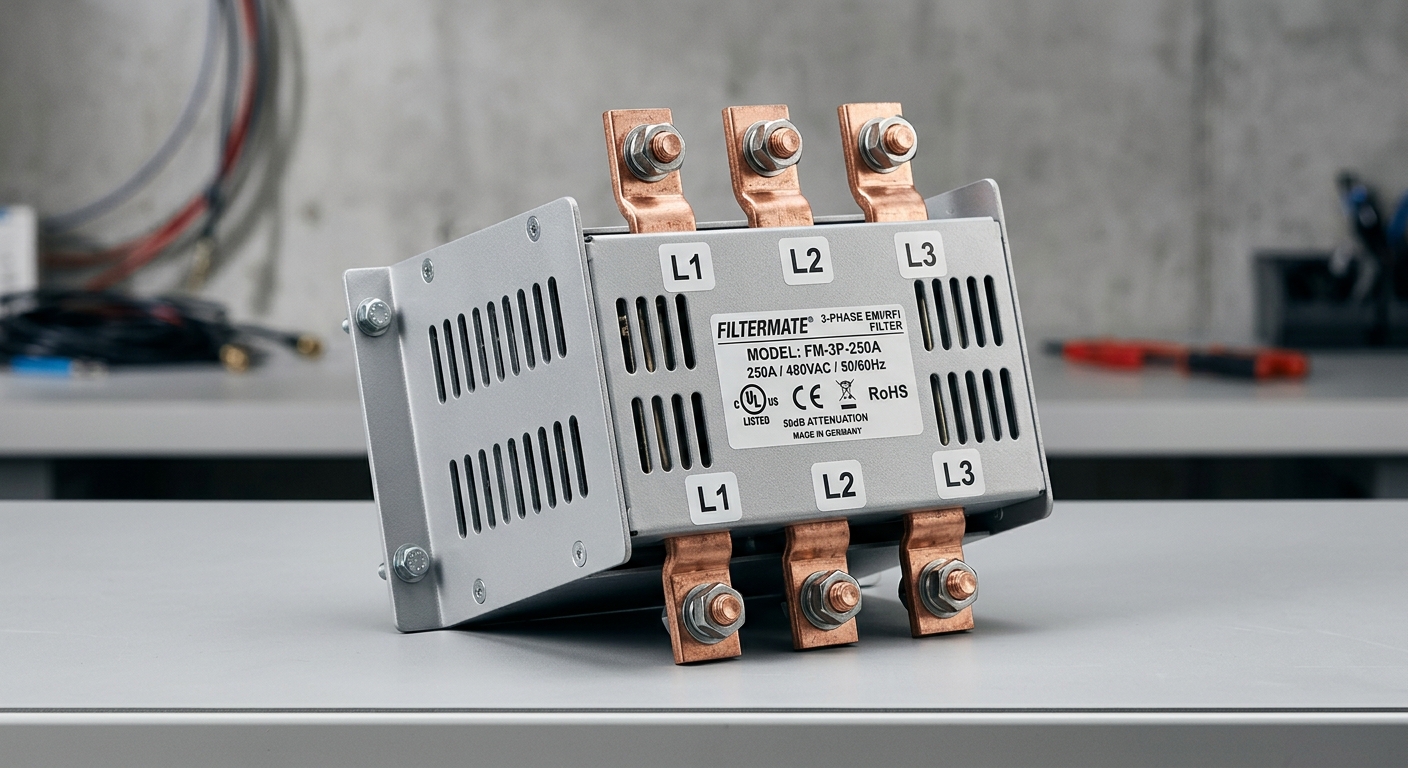
Types of Three Phase Filters
Three Phase EMI Filter
A Three Phase EMI Filter targets conducted emissions in the 150 kHz–30 MHz band defined by CISPR and EN 55011 standards.
- Designed for variable frequency drives (VFDs), servo drives, and power inverters.
- Provides Class B or Class C insertion loss performance per IEC 60939-3.
- Available in current ratings from 3 A to 3,000 A; voltage ratings of 250 V, 480 V, or 690 V AC.
Three Phase Power Line Filter
A Three Phase Power Line Filter combines EMI suppression with broader power conditioning functions.
- Integrates surge suppression (MOV-based) alongside LC filter stages.
- Suitable for UPS systems, industrial CNC machines, and HVAC compressors.
- Leakage current: typically < 3.5 mA for IT equipment; < 30 mA for industrial machinery per IEC 60950 / IEC 62368.
Passive vs. Active Three Phase Filter
| Parameter | Passive Three Phase Filter | Active Power Filter (APF) |
|---|---|---|
| Harmonic mitigation | Limited (fundamental + switching noise) | Up to 50th harmonic |
| Cost | Low (USD 50–500) | High (USD 2,000–20,000) |
| Power loss | 0.1%–0.5% of rated power | 1%–3% |
| Response time | Instantaneous | 20–100 µs |
| Typical application | EMI/RFI suppression | THD correction, reactive power |
For harmonic distortion reduction beyond 5th-order harmonics, an active filter or hybrid solution is recommended alongside the passive Three Phase EMI Filter.
Key Specifications for Three Phase Filter Selection
Selecting the correct Three Phase Filter requires evaluating six parameters:
1. Rated Current (I_n)
- Must equal or exceed the continuous load current.
- Derate by 10–15% in ambient temperatures above 40°C.
2. Rated Voltage
- Standard options: 250 V, 480 V, 520 V, 690 V AC (50/60 Hz).
- Confirm compatibility with local grid voltage ± 10% tolerance.
3. Insertion Loss (dB)
- Specify minimum attenuation at 150 kHz and 10 MHz.
- Higher dB values require larger inductors, increasing filter size and cost.
4. Leakage Current
- Critical for GFCI-protected circuits and medical-adjacent installations.
- Low-leakage variants: < 0.5 mA; standard industrial: 1–30 mA.
5. Operating Temperature Range
- Industrial grade: –25°C to +85°C.
- Confirm core material stability (ferrite vs. nanocrystalline) across full range.
6. Mechanical Form Factor
- DIN rail mount: up to 100 A.
- Chassis/panel mount: 100–800 A.
- Busbar-connected enclosure: > 800 A.
Three Phase Filter vs. Single-Phase Filter: Key Differences
| Attribute | Three Phase Filter | Single-Phase Filter |
|---|---|---|
| Phase conductors | 3 (or 3+N, 3+N+PE) | 1 (L + N) |
| Common-mode choke design | Three-winding balanced core | Two-winding core |
| Typical current range | 3 A – 3,000 A | 1 A – 100 A |
| Application | VFD, motor drive, industrial panel | IT equipment, lab instruments |
| IEC standard | IEC 60939-3 | IEC 60939-2 |
| Physical size | Larger; 3× conductor cross-section | Compact |
A single-phase filter cannot be substituted for a Three Phase Filter in three-phase systems. Doing so creates unbalanced impedance, increases common-mode noise, and may violate EMC compliance.
Industrial Applications of Three Phase Filters
Application 1: Variable Frequency Drive (VFD) Systems
- VFDs generate switching noise at frequencies of 2–16 kHz (PWM carrier) plus harmonics up to 30 MHz.
- A Three Phase EMI Filter installed on the input side reduces conducted emissions to CISPR 11 Class A/B limits.
- On the output side, a dV/dt filter or sine wave filter protects motor insulation from voltage spikes > 1,000 V/µs.
Application 2: Industrial UPS and Power Conditioning
- Three Phase Power Line Filters in UPS systems suppress upstream grid noise (< 150 kHz transients) and prevent UPS-generated switching noise from propagating to sensitive loads.
- Leakage current must be < 3.5 mA when connected to IT-class equipment per IEC 62368-1.
Application 3: New Energy and EV Charging Infrastructure
- Grid-tied solar inverters and EV charging stations (Level 2/DC fast chargers) require Three Phase EMI Filters to meet IEC 61851 and EN 55011 conducted emission standards.
- Filters rated at 480 V / 100–630 A with integrated surge protection are the standard configuration for 50–250 kW charger cabinets.
Three Phase Filter Selection Guide: Decision Matrix
Use this decision matrix when specifying a Three Phase Filter for a new installation:
| Requirement | Recommended Filter Type | Key Spec to Verify |
|---|---|---|
| VFD EMI compliance (CISPR 11) | Three Phase EMI Filter | Insertion loss ≥ 50 dB @ 1 MHz |
| UPS power conditioning | Three Phase Power Line Filter | Leakage current < 3.5 mA |
| High harmonic distortion (THD > 8%) | APF + Three Phase EMI Filter | THD reduction to < 5% |
| Outdoor / harsh environment | IP54/IP65 rated enclosure | IK08 impact rating |
| Space-constrained panel | DIN rail Three Phase Filter | Width ≤ 45 mm per pole |
| High current (> 800 A) | Busbar-mount filter | Conductor rating, thermal class |
FAQ: Three Phase Filter
What is a Three Phase Filter and what does it do?
It suppresses conducted EMI on three-phase power lines, protecting equipment from noise-induced failures.
When should I use a Three Phase Filter?
Use it whenever a three-phase load must comply with CISPR 11, EN 55011, or FCC Part 15 conducted emission limits.
How do I choose the right Three Phase Filter?
Match rated current, voltage, insertion loss (dB), and leakage current to the load and regulatory requirement.
What is the difference between a Three Phase Filter and a single-phase filter?
A Three Phase Filter uses a balanced three-winding common-mode choke; a single-phase filter cannot balance three-phase noise currents.
Can a Three Phase Filter improve power quality in industrial equipment?
It reduces high-frequency noise and transients; for harmonic (THD) correction, pair it with an active power filter.
What current ratings are available for Three Phase EMI Filters?
Standard range: 3 A to 3,000 A, covering light industrial to heavy-duty motor drive applications.
Is a Three Phase Filter required for VFD installations?
Yes, for CE marking and EMC compliance under the EU EMC Directive 2014/30/EU.
What standards govern Three Phase Power Line Filters?
Primary standards: IEC 60939, CISPR 11, EN 55011, and IEC 61800-3 for drive systems.
Conclusion
A correctly specified Three Phase Filter is a non-negotiable component in any EMC-compliant industrial power system. Key decisions center on current rating, insertion loss class, leakage current, and mechanical format. For VFD and motor drive applications, a Three Phase EMI Filter delivering ≥ 50 dB attenuation at 1 MHz is the baseline requirement. For UPS and sensitive loads, prioritize low-leakage Three Phase Power Line Filter variants. When harmonic distortion exceeds 8% THD, combine passive filtering with an active power filter.
Action: Before procurement, confirm the filter’s insertion loss curve against your specific load impedance, verify leakage current against ground fault protection settings, and validate the enclosure IP rating against the installation environment.
References and Standards
- IEC 60939-1/2/3: Passive EMC components — Passive filters
- CISPR 11 (Ed. 6.2): Industrial, scientific, and medical equipment — Radio-frequency disturbance characteristics
- EN 55011: Limits and methods of measurement of radio disturbance characteristics of industrial equipment
- IEC 61800-3: Adjustable speed electrical power drive systems — EMC requirements
- IEC 62368-1: Audio/video, IT and communications technology equipment — Safety requirements
- IEC 61851-1: Electric vehicle conductive charging system — General requirements
- EU EMC Directive 2014/30/EU: Electromagnetic compatibility of electrical equipment